
The most depopulated regions of Galicia will also experience this Wednesday, August 12, the total solar eclipse that will cross a strip of the Iberian Peninsula. Thousands of people plan to travel to the locations where the moon will completely hide the sun for about a minute, including some of the country’s least densely populated areas.
TEXT: Antía Paz.
PHOTO: Brais Lorenzo.
An old Galician saying goes that the night is for sleeping and the day is for working, but this Wednesday, August 12, time will stand still for a moment in the middle of the afternoon: the moon’s shadow will cross Galicia from northwest to southeast, turning day into night for just over a minute. The path where the solar eclipse can be observed as total will pass through 143 of Galicia’s 313 municipalities, traversing the region from northwest to southeast.
The path of total darkness encompasses much of the north and center of A Coruña, practically the entire province of Lugo, the north of Pontevedra, and the eastern and mountainous regions of Ourense. The National Geographic Institute places its maximum around 8:28 PM in A Coruña and Lugo, although schedules and duration will vary depending on the exact location.
This phenomenon is expected to draw thousands of people to the places where totality will be longest and viewing conditions most favorable. This extraordinary event—considering that the last total solar eclipse visible from Galicia occurred in 1912—will also follow a path of lunar shadow crossing some of the country’s least densely populated areas.
A shadow crosses the country
Cross-referencing the path of totality with the map of places, many of them documented in this project, and the most recent demographic data from the Galician Statistics Institute, the result is particularly revealing: the moon’s shadow over the sun will cross some of the least populated areas in Galicia and the entire Iberian Peninsula.
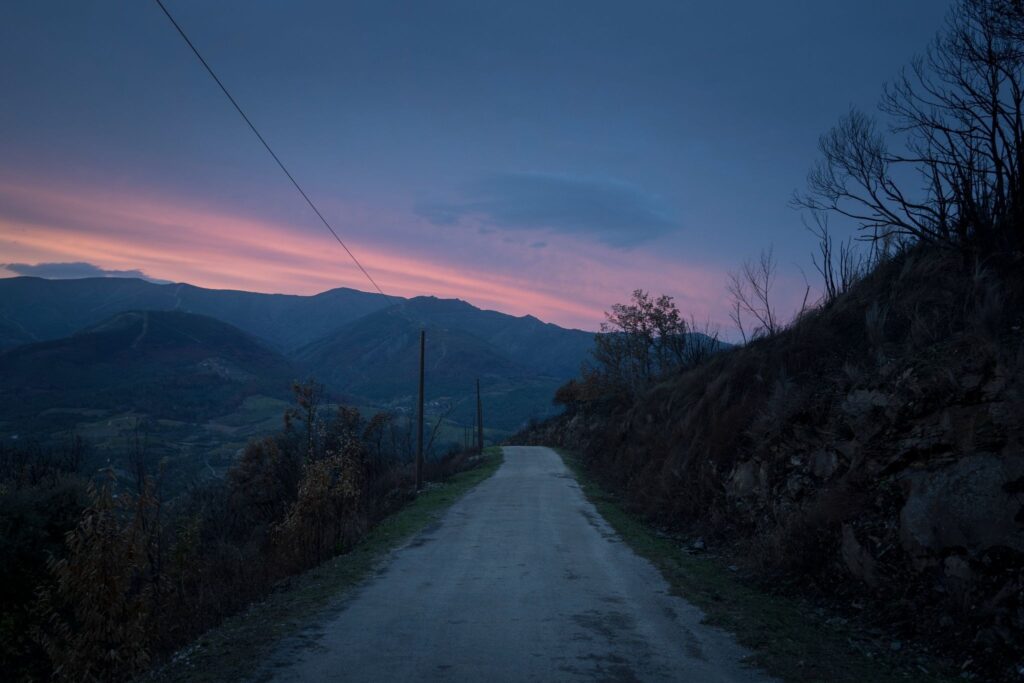
At the extreme end of depopulation are Vilariño de Conso, in the Viana region, and Chandrexa de Queixa, in Terra de Trives. With barely 2.5 and 2.7 inhabitants per square kilometer, respectively, both municipalities constitute the demographic epicenter of the so-called Galician void. Vilariño de Conso, spanning more than 170 square kilometers and home to a population of around 430 residents, will fall completely under the umbral darkness (according to official predictions), as will some of the most depopulated villages and valleys of Chandrexa de Queixa.
Within the 100% obscuration path is also Negueira de Muñiz, in the eastern mountains of Lugo, with just 3.3 inhabitants per square kilometer. This is the least populated municipality in Galicia and will experience around a minute and a half of total darkness. Another key location on this map is Muras, in the Lugo mountains, which currently has about 3.5 inhabitants per square kilometer. On August 12, it will lie within the path of totality, and the phase where the moon completely covers the sun will last about one minute and forty seconds.
Very close to this reality is Cervantes, in the Ancares range, with 4.1 inhabitants per square kilometer, where the eclipse will also be total. The same is expected in Folgoso do Courel, home to 4.8 inhabitants per square kilometer, where the shadow will completely cover both villages and mountains—areas hit hard by fires last summer. A Fonsagrada, Galicia’s largest municipality by area and one of its most sparsely populated with just 7 inhabitants per square kilometer, will also witness the total eclipse.
The eclipse… That nobody will see?
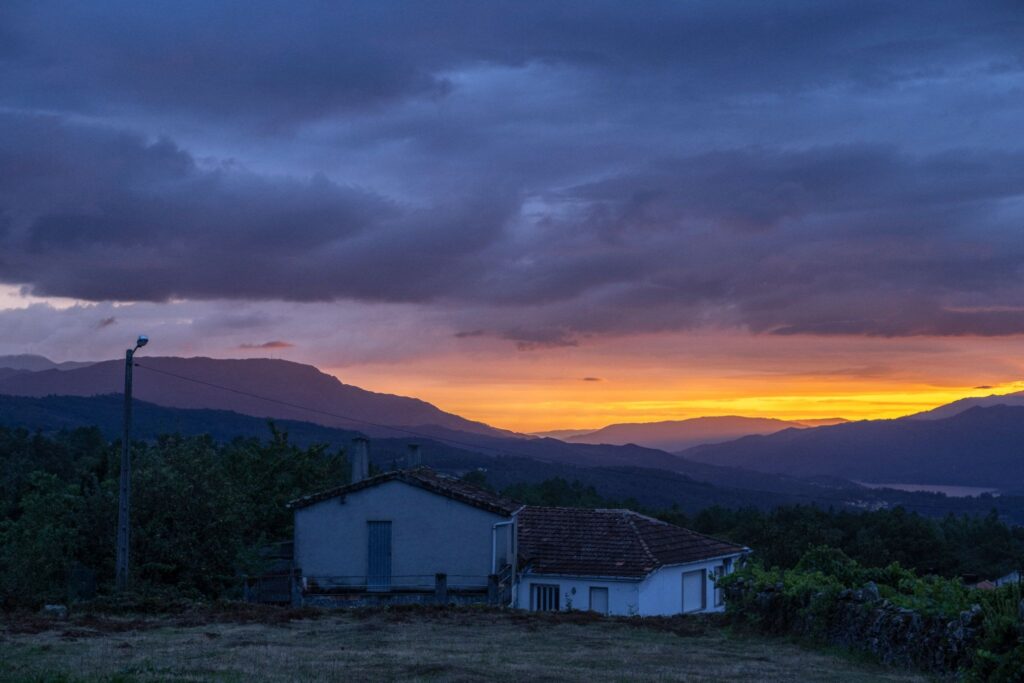
While the astronomical phenomenon will draw thousands to the path of totality—putting particular pressure on certain coastal spots in A Coruña and A Mariña Lucense, alongside high tourism forecasts for cities like A Coruña—the lunar shadow will also sweep across many areas where population loss is a reality of daily life.
When the moon completely blocks the sun late in the afternoon of this unusual August Wednesday, its shadow will advance across miles of mountains, valleys, and villages, including many of the more than 2,000 completely abandoned hamlets. In some of the country’s most depopulated areas, there will be those who look up at the sky; in others, probably no one will. What is certain is an extraordinary coincidence: for just over a minute, the most spectacular twilight will traverse the duality of a land defined by both overcrowding and abandonment.