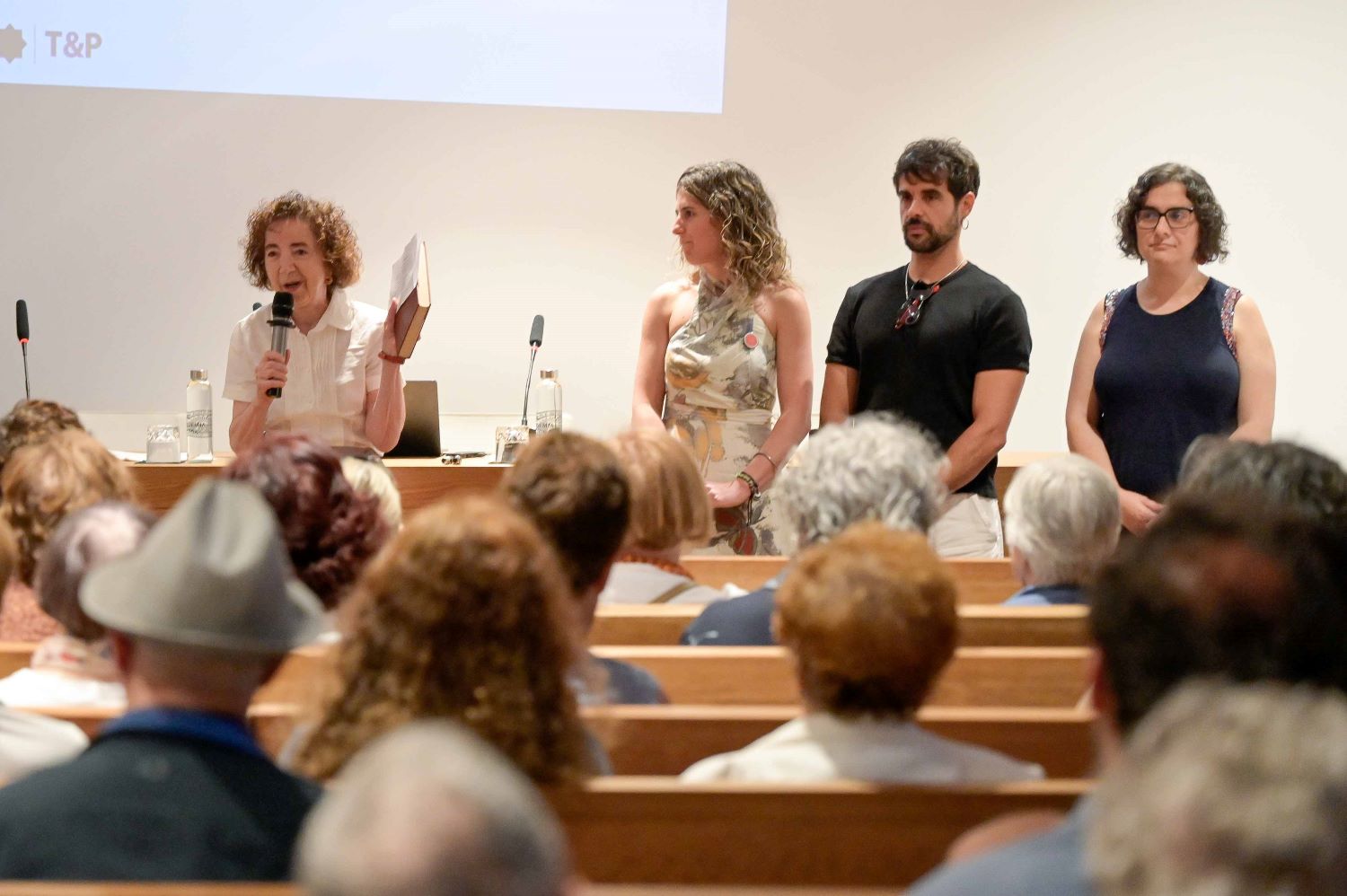
Brais Lorenzo shared the panel with researcher Alba R. Saavedra and historian Ana Cabana Iglesia
The photojournalist from Habitar o baleiro, Brais Lorenzo, participated alongside researcher Alba R. Saavedra and historian Ana Cabana Iglesia in the seminar Ruth Matilda Anderson: a ollada nas mulleres. This panel discussion, organized by the Real Academia Galega (RAG), focused on the community role of Galician women in rural areas and the figure of the American photographer, and took place at the Fundación Luís Seoane (A Coruña).
The legacy of Ruth Matilda Anderson (1893–1983), the photographer from Nebraska who a century ago captured the workforce of women in Galicia, was the guiding thread of the third meeting of the RAG’s Working Group on Thought and Essay.
The seminar, coordinated by Marilar Aleixandre and prompted by Alba Rodríguez Saavedra’s essay —winner of the 2026 Follas Novas Award— Ruth Matilda Anderson. Tradutora das marxes, centered on the need to articulate alternative narratives about Galicia that move past folklorism and extractivism.
Brais Lorenzo praised Anderson’s pioneering work and showcased part of his own photographic labor centered around women in Galician villages and small towns, featuring the theme of wildfires as one of its main axes.
Rodríguez Saavedra, who is also a member of the collective, participated this time as an expert on Anderson’s figure, demonstrating how that “violet gaze” of the 1920s directly dialogues with contemporary documentary practice.
USC historian Ana Cabana shared part of the conclusions from her extensive study on the role of rural women today and delved into the many clichés and stereotypes that still surround them, focusing on the historical gender inequality between “having a job” and “doing chores.”
The seminar analyzed how Anderson’s work suffered a long period of oblivion due to its subversive nature, which openly questioned the official, masculinized narrative of the first third of the 20th century. Saavedra explained that the Nebraska photographer did not seek a narrative complacent with the canon of the era, but instead drew inspiration from Emilia Pardo Bazán and a combative, feminist, and wryly ironic Rosalía de Castro, whose work she even translated into English.
Cabana emphasized that Anderson was a pioneer in portraying milkmaids, mailwomen, or lace-makers (palilleiras) not from a place of paternalism, but by identifying in them a powerful “industry” and a key economic value in a country emptied by the emigration of men.
Resistance, hope, and future
A century after Anderson’s last stay in Galicia, the multiplatform project Habitar o Baleiro takes up the torch of that peripheral gaze to reshape how the territory is narrated. Lorenzo, recently awarded the World Press Photo for his work on last summer’s wildfires, explained that the collective’s purpose in the most isolated villages, especially in Lugo and Ourense, goes beyond witnessing the scars of depopulation or environmental neglect.
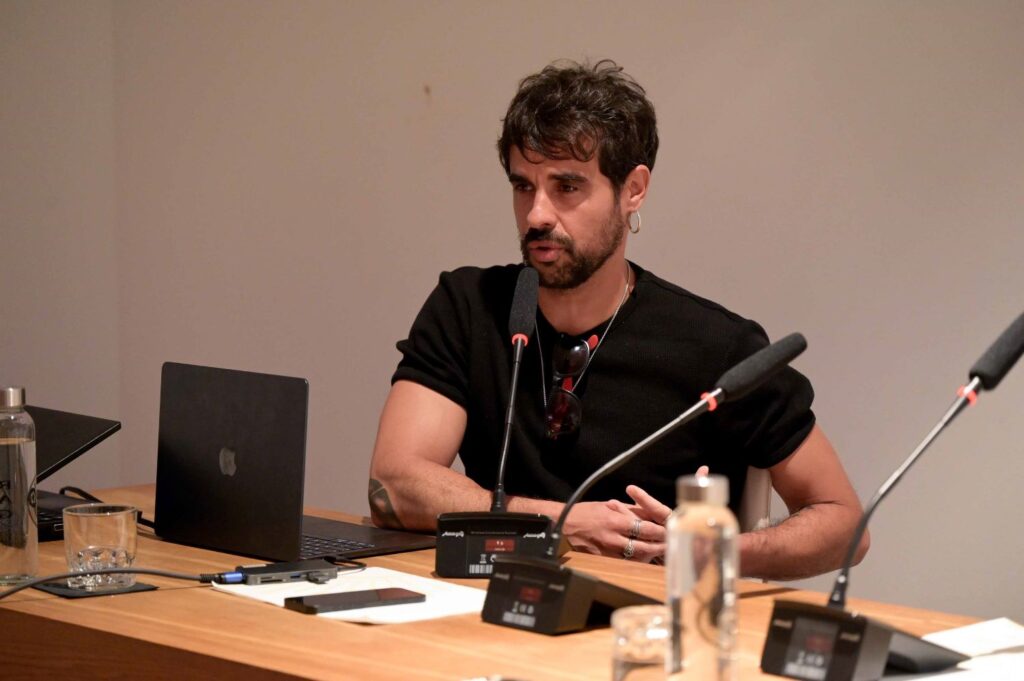
“The current challenge lies in discovering and documenting the new and hopeful ways of life that are blossoming in the Galician countryside, challenging defeatist narratives and shining a light on what is re-emerging today,” he noted.
This new approach proves that, just as in Anderson’s time, the resilience and sustainability of our communities continue to have a predominantly female face.
Lorenzo pointed out that women continue to be the backbone of the rural world in the face of a lack of services, taking on both caregiving and land management, but he highlighted a paradigm shift: the emergence of entrepreneurial projects that generate a collective future.
Examples documented by Habitar o baleiro, such as Natalia in apiculture in A Ulloa, María José with dehydrated fruit in Silleda, or Luz with her canning cooperative in Negueira de Muñiz, show how today’s rural women, far from being passive subjects, continue to be—exactly as Anderson saw them—the essential economic engine of the country.