
ANTÍA PAZ
Text
BRAIS LORENZO
Pictures
Living in a mountainous rural area means having a very different relationship with time and public services from that experienced in a city. Distance is not measured solely in kilometres: road conditions, transport frequency, staff availability and the ability to get a medical appointment or reach school in adverse weather conditions also matter. While the first part of this analysis measured the impact of housing and fuel, this second part focuses on two essential infrastructures: healthcare and education.
Distances to services and the size of school communities shed light on another dimension of the cost of living in a particular territory. Studying or falling ill in the mountains does not necessarily mean spending more money, but it does mean travelling further and taking more time to access certain services. For a family, having a nearby school, a safe school bus route or an available healthcare professional can make the difference between staying in the area and being forced to move elsewhere.
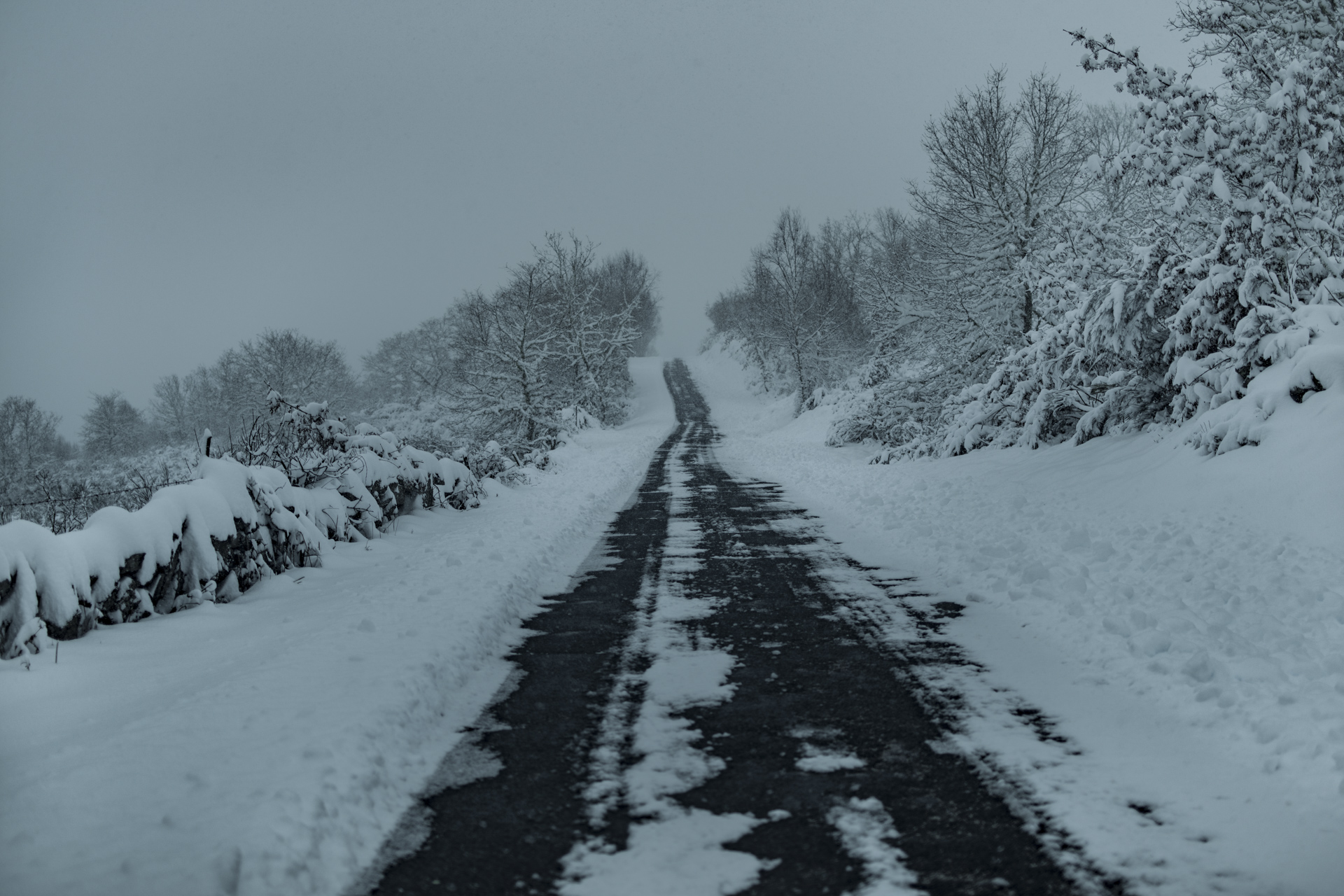
The analysis of education and healthcare also shows that distance is not a static problem. A landslide or a snowfall can disrupt a school route, while the absence of a doctor can force people to travel dozens of kilometres for a basic consultation. Rural communities do not remain passive in the face of these difficulties: families call for safe routes, residents protest against staff shortages, and healthcare professionals themselves launch initiatives to improve life in their municipalities.
Healthcare means more than having a health centre
As in the previous analysis, four rural municipalities have been selected: A Veiga, Chandrexa de Queixa, Negueira de Muñiz and Folgoso do Courel. They all have primary healthcare facilities within their municipal boundaries, in the form of health centres or local clinics, but that is only part of the picture. The other part is the actual availability of doctors and nurses, cover for staff absences, the distance to out-of-hours care facilities and the ability to dispatch an ambulance in an emergency.
The situation is not uniform. Some municipalities have more than one healthcare facility; in others, consultations are available only during certain time slots. In some cases, residents report having to travel to another municipality to receive care.
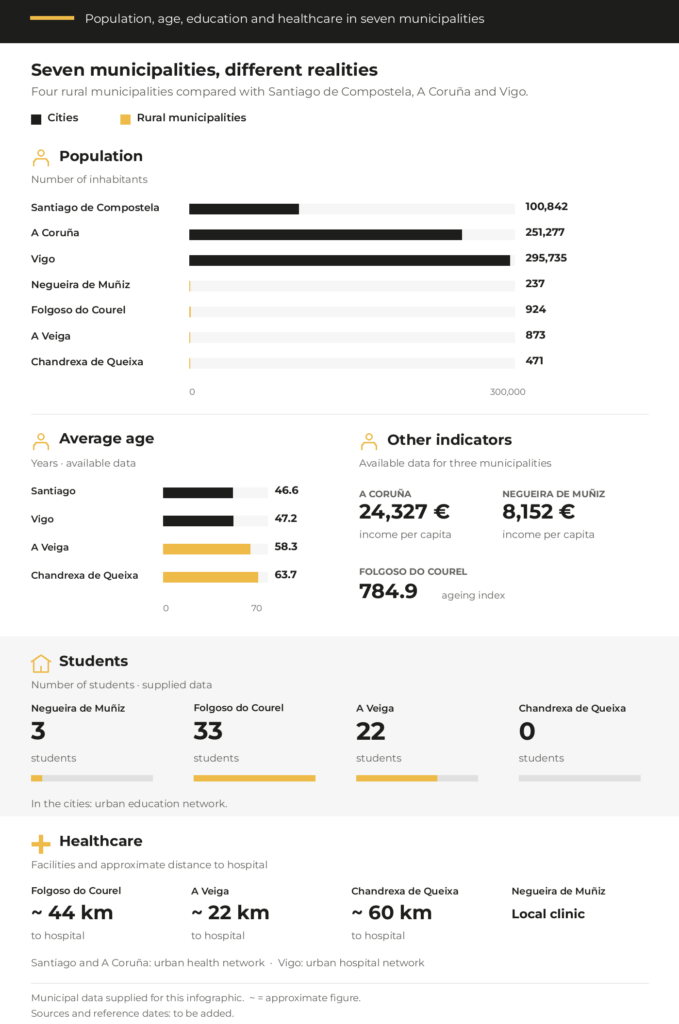
Folgoso do Courel has two primary healthcare facilities: the health centre in Folgoso and the local clinic in Seoane. According to Sergas, each facility has an assigned doctor, a nursing professional and a general services worker. Despite these resources on paper, the municipality was left without its regular doctors for two months in 2024. Following a series of protests by residents, the situation persisted until Sergas itself acknowledged the problem, explaining that vacancies were difficult to fill in the area. The situation illustrates the fragility of a healthcare system with very limited staff.
The distance to the referral hospital also affects residents’ daily lives: Monforte Public Hospital is 44 kilometres away. For a specialist appointment, a diagnostic test or hospital admission, the journey can take considerably longer than the distance alone might suggest, especially when roadworks or difficult road conditions are involved.
Primary care in A Veiga is provided locally, while the referral hospital is Valdeorras Public Hospital in O Barco. The distance from A Veiga is approximately 22 kilometres, although, as in the other cases, it varies depending on the settlement of origin. In June 2024, Sergas assigned the municipality a conventional 061 ambulance, available 24 hours a day but not equipped for serious emergencies. Primary care also faced staffing difficulties in 2025, for the same reasons as in Folgoso do Courel.
Negueira de Muñiz has a local clinic, while some basic and ongoing care is provided in A Fonsagrada. For hospital treatment and certain specialities, the referral facility is the HULA hospital in Lugo, several dozen kilometres away by road. The lack of nearby paediatric care is the main problem reported in the area. In 2025, families raised the alarm over the absence of a paediatrician for more than two months. The alternatives were to see a family doctor or travel to Lugo. In September 2026, the mayor of Negueira de Muñiz said the municipality had gone years without stable family medicine coverage.
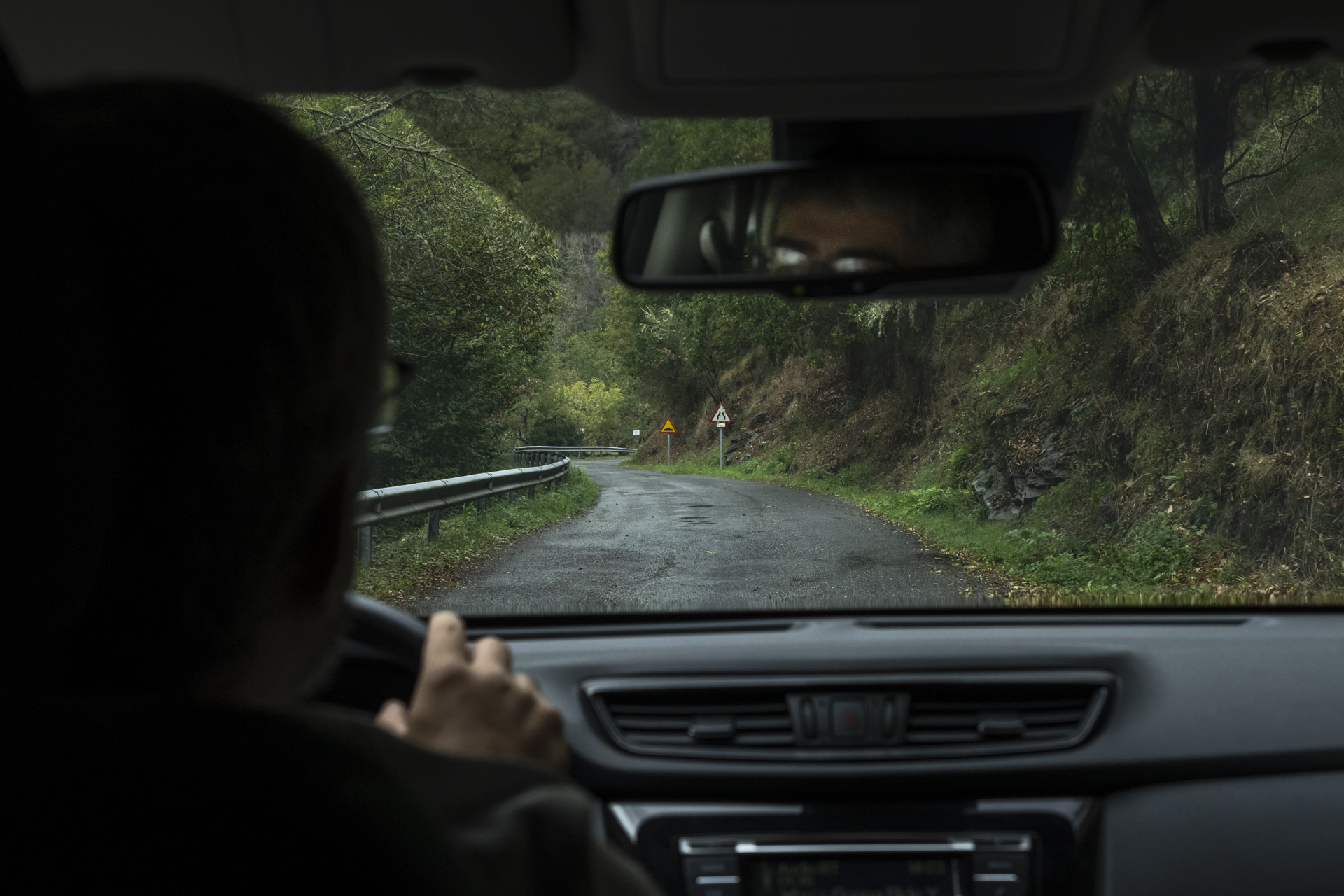
Chandrexa de Queixa has a health centre in Celeiros. Its referral hospital is in Ourense, around 60 kilometres from the health centre. This is particularly relevant for specialist appointments and emergencies, and should not be confused with the time patients take to travel or, for example, the time an ambulance needs to reach a patient’s home.
The healthcare gap, therefore, cannot be summed up simply as whether a family doctor is present or absent. It also concerns the distance people must travel to access emergency services such as an ambulance, as well as hospitals, specialists, certain treatments and diagnostic tests. In mountainous areas, road conditions and the weather can change journey times and make it harder both for patients to reach healthcare facilities and for ambulances to be dispatched.
When education fits into just a few classrooms
The educational picture makes the demographic scale of the municipalities studied particularly visible.
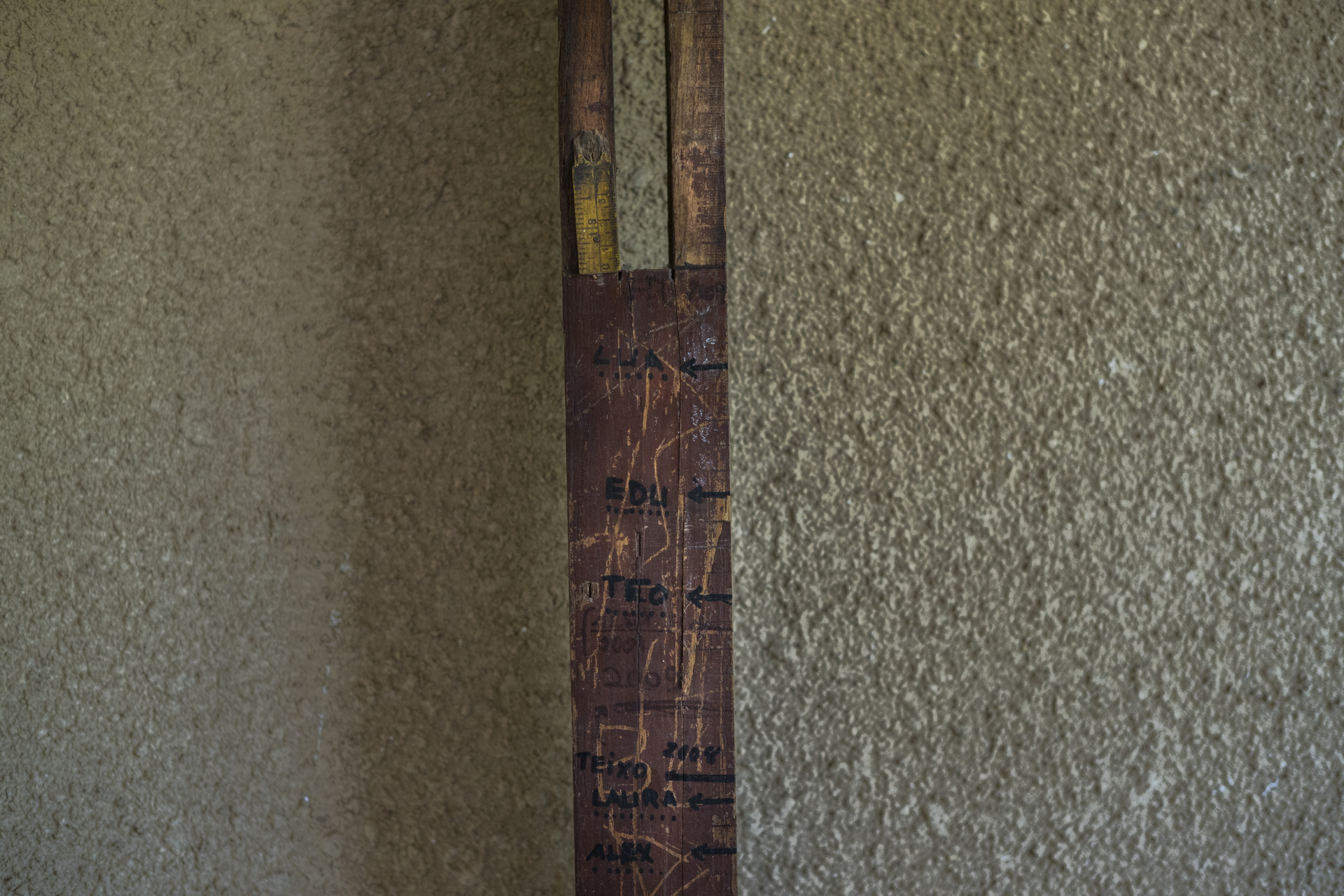
Folgoso do Courel has 33 pupils enrolled in pre-primary, primary and compulsory secondary education (ESO). A Veiga has 22, all in pre-primary and primary education. Negueira de Muñiz had three primary-school pupils during the period covered by this analysis, although its school had to close a year ago. In 2026, Chandrexa de Queixa has no pupils enrolled in these educational stages within the municipality.
The CPI Poeta Uxío Novoneyra, located in Seoane do Courel, brings together all pre-primary, primary and ESO pupils from Folgoso. For decades, the school’s management and parents’ association (ANPA) have submitted complaints and petitions to the Government of Galicia and the Spanish government calling for improvements to the roads connecting the municipality and to the school transport network that uses them. School transport is affected every year by roadworks and even by weather conditions. Journeys to school can take as long as one hour and forty minutes; alternative routes along livestock tracks have also been proposed, although these often fail to meet the safety standards required for transporting schoolchildren.
A Veiga still has the CEIP Eduardo Ávila Bustillo, which educates 22 children in pre-primary and primary school. Having a school in the municipality means pupils at these stages do not necessarily have to travel to another municipality, but it does not remove the difficulties faced by families living in the most remote settlements.
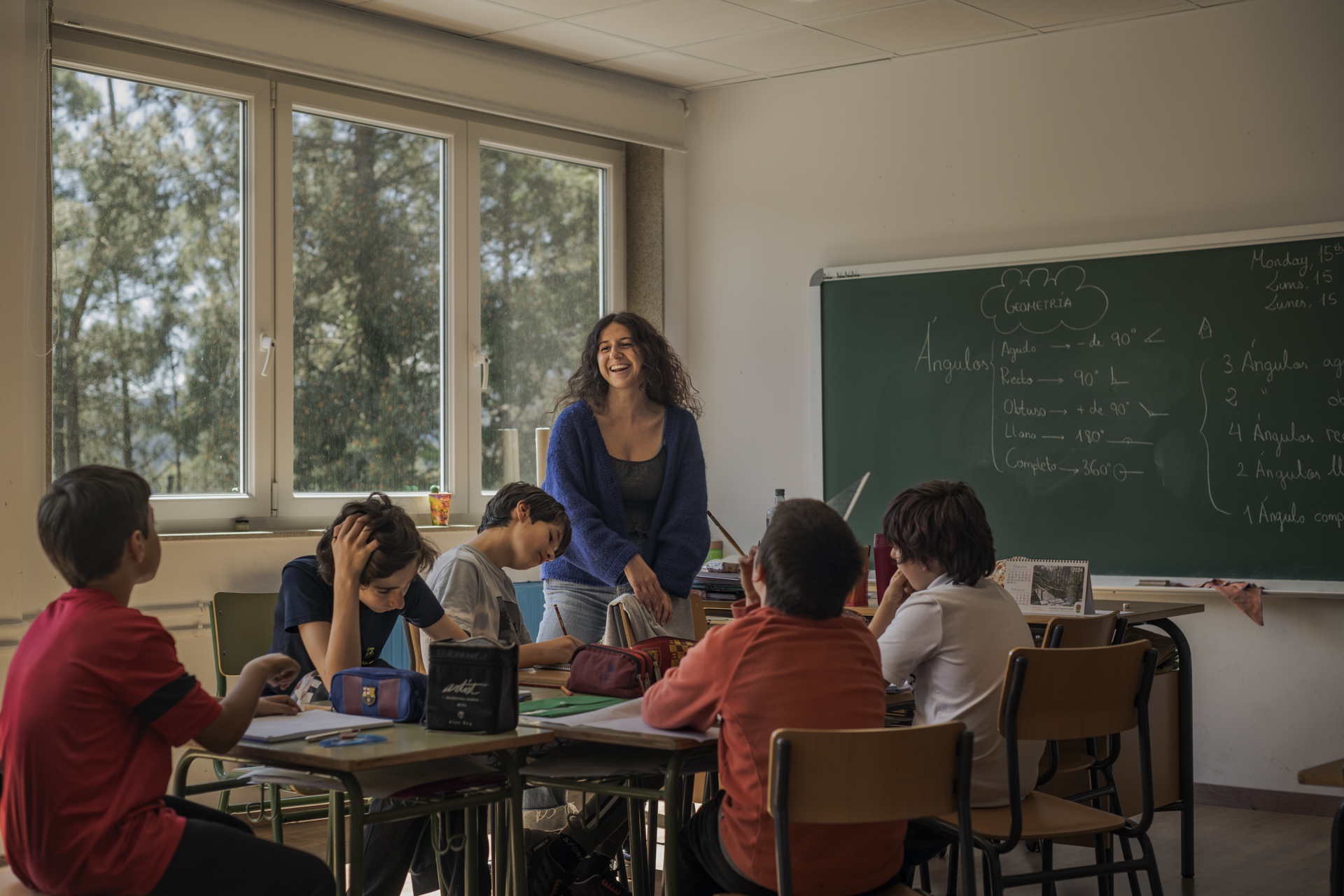
Negueira de Muñiz is an even more telling example of the relationship between population trends and educational services. In the summer of 2025, the Galician government announced that the municipality’s CEIP would close due to a lack of pupils. The school, which reopened in 2019 after seven years closed, had six primary-school pupils in the 2024–2025 school year, but expected enrolment for the following year fell to three. The school community and the regional education department therefore agreed that the children would continue their studies in A Fonsagrada. This change meant the disappearance of the municipality’s last pre-primary and primary school and added a daily journey of up to an hour and a half each way for the children.
According to the IGE, Chandrexa de Queixa has had no pupils enrolled in pre-primary, primary or ESO since 2025. The absence of local enrolment does not mean that no children live in the municipality or that they are not attending school. It means that educational provision for these stages is concentrated outside the municipality, with all that entails.
The issue is not merely numerical. It is not enough to know how far a home is from a school; it also matters who makes that journey every day, what transport they use and how long it takes.
Nor is it irrelevant whether a school remains open or pupils have to travel to another municipality. A school is a meeting place and a piece of community infrastructure. When it disappears, it changes not only children’s lives but also part of the everyday life of the place.
CASE STUDIES · THE FACTS, ONE BY ONE
- CHANDREXA DE QUEIXA (OURENSE)
- Population: 471 inhabitants (2025) | 15 residents under 15 | 228 residents over 65 | Average age: 63.7 years | Area: 171.8 km².
- Gross disposable income: €12,136 per inhabitant (2023).
- Education and healthcare: no pupils enrolled in pre-primary, primary or ESO within the municipality. Primary care in Celeiros. The referral hospital is in Ourense, approximately 60 km from the municipal centre.
- THE FIGURES: 471 residents · Average age 63.7 · 0 pupils · approx. 60 km to hospital
- A VEIGA (OURENSE)
- Population: 873 inhabitants (2025) | 43 residents under 15 | 380 residents over 65 | Average age: 58.3 years.
- Gross disposable income: €16,539 per inhabitant (2023).
- Education and healthcare: 22 pupils. Local primary care. The referral hospital is in O Barco de Valdeorras, approximately 22 km from A Veiga.
- THE FIGURES: 873 residents · Average age 58.3 · 22 pupils · approx. 22 km to hospital
- FOLGOSO DO COUREL (LUGO)
- Population: 924 inhabitants (2025) | 36 residents under 15 | 405 residents over 65 | Average age: 59.3 years | Ageing index: 784.91.
- Gross disposable income: €13,313 per inhabitant (2023).
- Education and healthcare: CPI Poeta Uxío Novoneyra (33 pupils: 5 in pre-primary, 17 in primary and 11 in ESO). Local primary care. Monforte Public Hospital is approximately 44 km away by road.
- THE FIGURES: 924 residents · Ageing index 784.9 · 33 pupils · approx. 44 km to hospital
- NEGUEIRA DE MUÑIZ (LUGO)
- Population: 237 inhabitants (2025) | 25 residents under 15 | 67 residents over 65 | Average age: 50.2 years.
- Gross disposable income: €8,152 per inhabitant (2023), the lowest among the municipalities analysed.
- Education and healthcare: 3 pupils, all in primary school. Local clinic. For hospital and specialist care, the referral facility is HULA in Lugo, several dozen kilometres away by road.
- THE FIGURES: 237 residents · Income: €8,152 per inhabitant · 3 pupils · Local clinic
- VIGO (PONTEVEDRA)
- Population: 295,735 inhabitants (2025) | Average age: 47.2 years.
- Gross disposable income: €20,061 per inhabitant (2023).
- Education and healthcare: an extensive urban network of primary and hospital care, with referral hospitals and educational provision from pre-primary school through to university.
- THE FIGURES: 295,735 residents · Average age 47.2 · Urban hospital and education network
- A CORUÑA
- Population: 251,277 inhabitants (2025) | Average age: 47.6 years.
- Gross disposable income: €24,327 per inhabitant (2023).
- Education and healthcare: CHUAC is one of the referral hospitals for the health area, and the city has a wide range of healthcare and educational services.
- THE FIGURES: 251,277 residents · Income: €24,327 per inhabitant · Urban healthcare and education network
- SANTIAGO DE COMPOSTELA
- Population: 100,842 inhabitants (2025) | Average age: 46.6 years.
- Gross disposable income: €23,581 per inhabitant (2023).
- Education and healthcare: CHUS is the referral hospital for the health area, and the city has a wide range of educational provision, including its university campus.
- THE FIGURES: 100,842 residents · Average age 46.6 · Urban healthcare and education network
Conclusion (II)
The cost of living in rural areas is measured not only in euros, but also in the distance and time required to access essential public services.
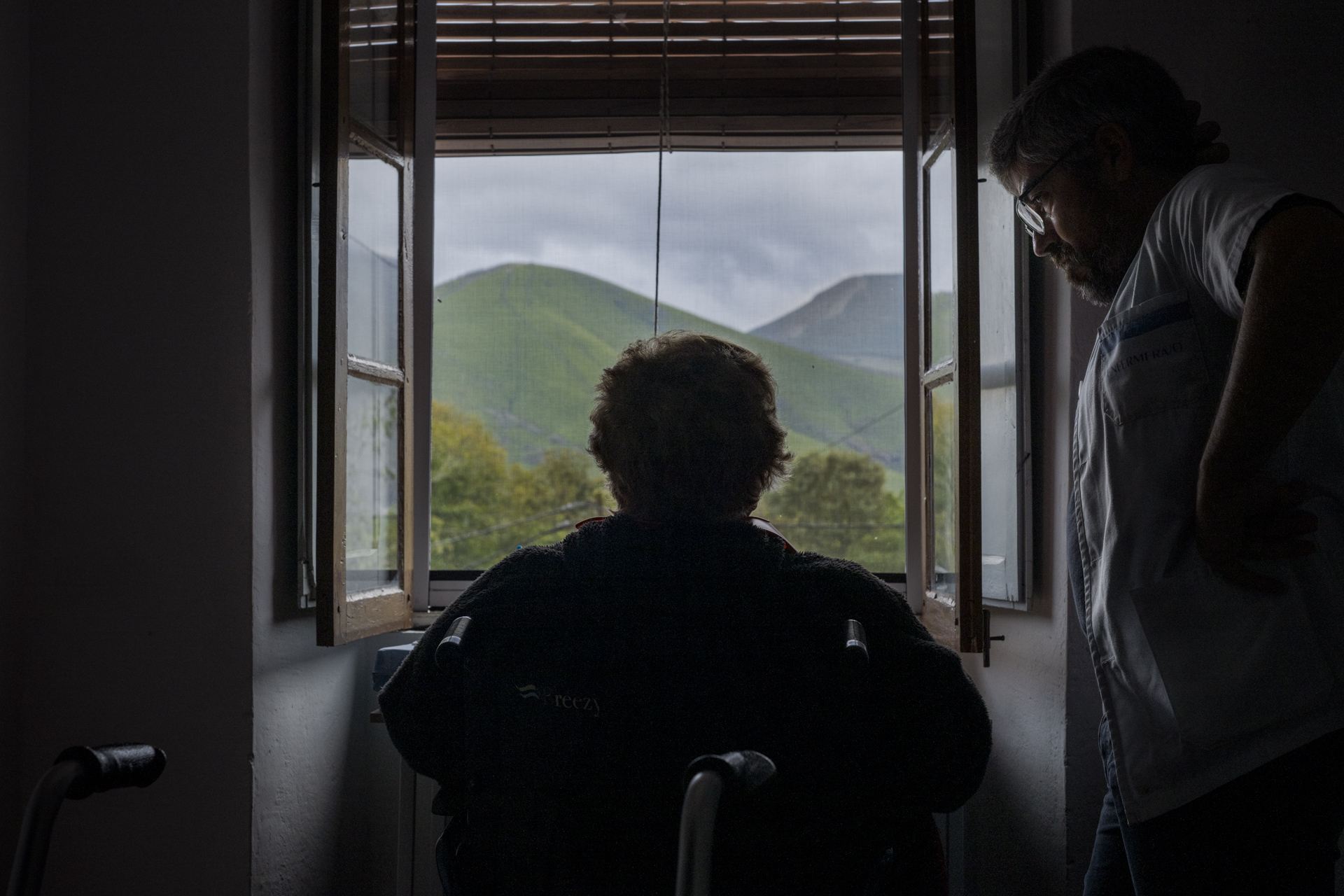
The cases of A Veiga, Chandrexa de Queixa, Folgoso do Courel and Negueira de Muñiz reveal different aspects of the same problem. In the municipalities analysed, school communities range from zero to 33 pupils and, combined with limited access to hospitals, this can mean travelling dozens of kilometres by road. Low population density requires public services to be organised across a more dispersed territory, meaning that residents must make journeys for certain services that, in a city, take place within the urban area itself.
But these communities are not empty territories, nor are they places where people passively accept the loss of services. Families in O Courel have called for safe school routes; residents of Negueira and A Fonsagrada have mobilised over the lack of medical staff; and healthcare associations and professionals have launched initiatives to improve care and tackle loneliness. Complaints, protests and residents’ proposals are part of the history of these places, where collective effort demands that living in a small municipality should not mean giving up the right to decent public services.
Distance is a geographical condition. Whether it becomes a barrier also depends on how services are organised, how many resources are allocated to them and whether the needs of rural communities are treated as a matter of equality.