
ANTÍA PAZ
Text

CLÁUDIA MORÁN
Text
BRAIS LORENZO
Photo
A critical look from the forest, academia, and activism
Every summer, fire returns to Galicia like a tragic tradition already embedded in our seasonal collective consciousness. Following the severe wildfires of last year, which swept through more than 115,000 hectares in our country, the recent wave of fires traversing the Spanish state, with episodes as dramatic as the one in Almería, where 13 people died, puts a concept increasingly repeated in the media on the table: “seventh-generation wildfires”.
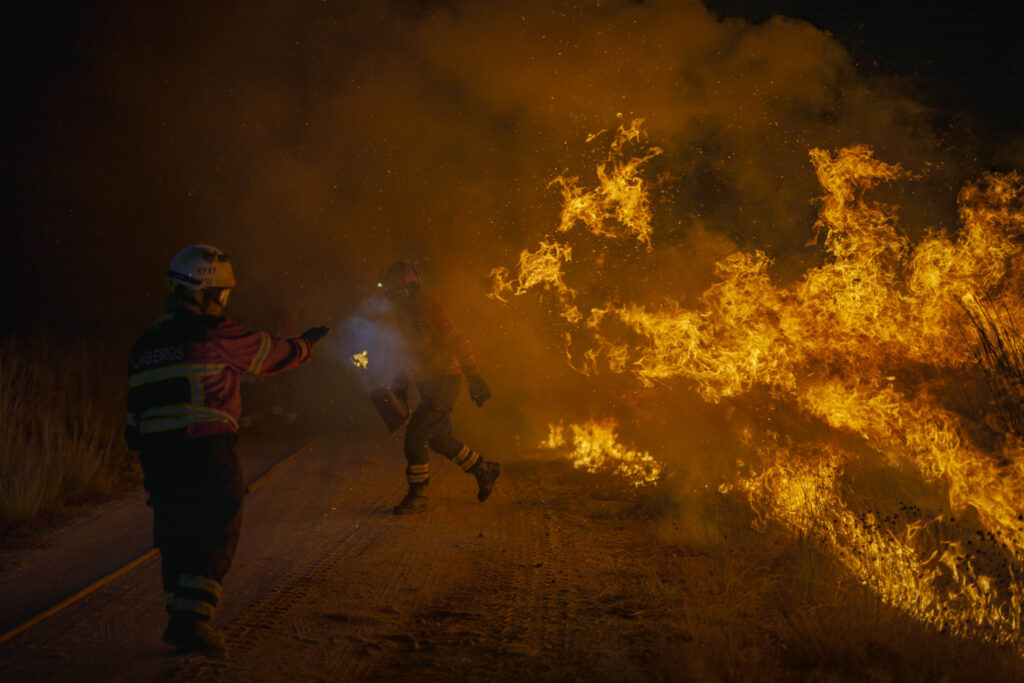
But does this category really exist, or does it stem more from a narrative strategy than a scientific reality? At Habitar o Baleiro, we spoke with four expert voices from the fields of firefighting, university research, sociology, and environmentalism to analyze it.
“Seventh generation” or extreme behavior?
The debate over so-called “seventh-generation wildfires” reflects an effort to highlight the severity of new fires rather than a formal scientific classification. While operational personnel use this term to describe faster, more voracious fires capable of threatening populated areas or altering local weather patterns, academia prefers to talk about extreme fire behavior or large forest fires.
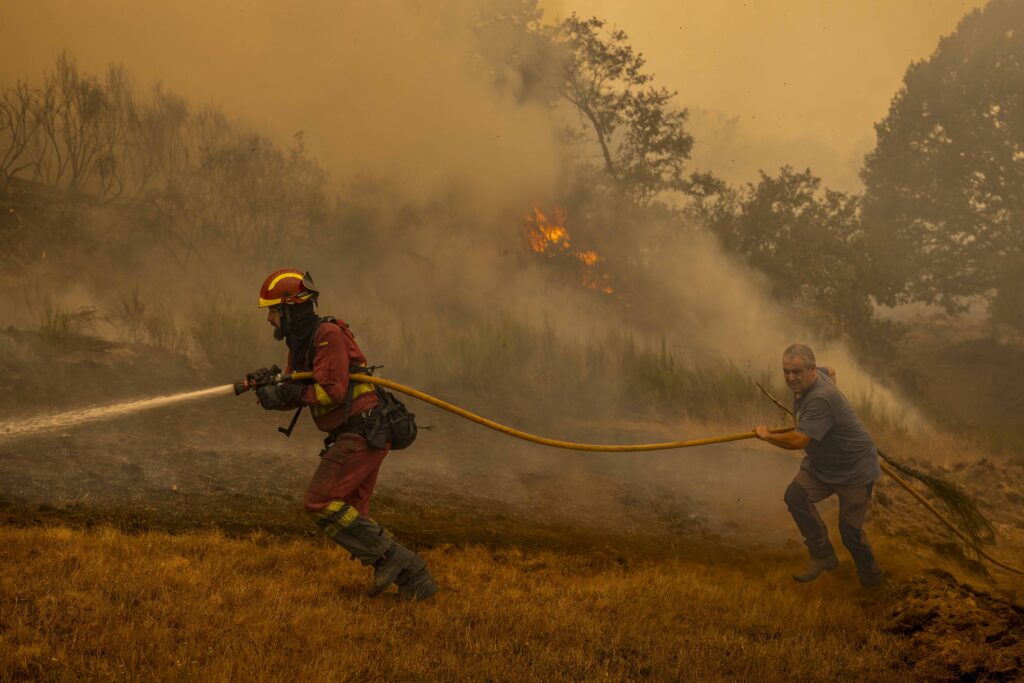
Juan Picos, director of the Escola de Enxeñaría Forestal (School of Forestry Engineering) at the Universidade de Vigo (UVigo), explains the origin and usage of the term: “The narrative of fire generations was coined by Marc Castellnou, an inspector with the firefighters of Cataluña, and it clearly caught on. I have never seen seventh-generation fires described in scientific literature, so I assume it is a more colloquial evolution. The worst part of that terminology is that it makes it seem as though each generation is simply awaiting the next”.
Meanwhile, Albert Sandoval, a wildland firefighter with the BRIF de Laza (Wildfire Prevention and Reinforcement Brigade from Laza, Ourense), describes how this evolution is experienced on the ground: “Fire specialists are already starting to refer to the fastest-spreading, most voracious fires—those affecting population centers and common resources—as seventh generation”.
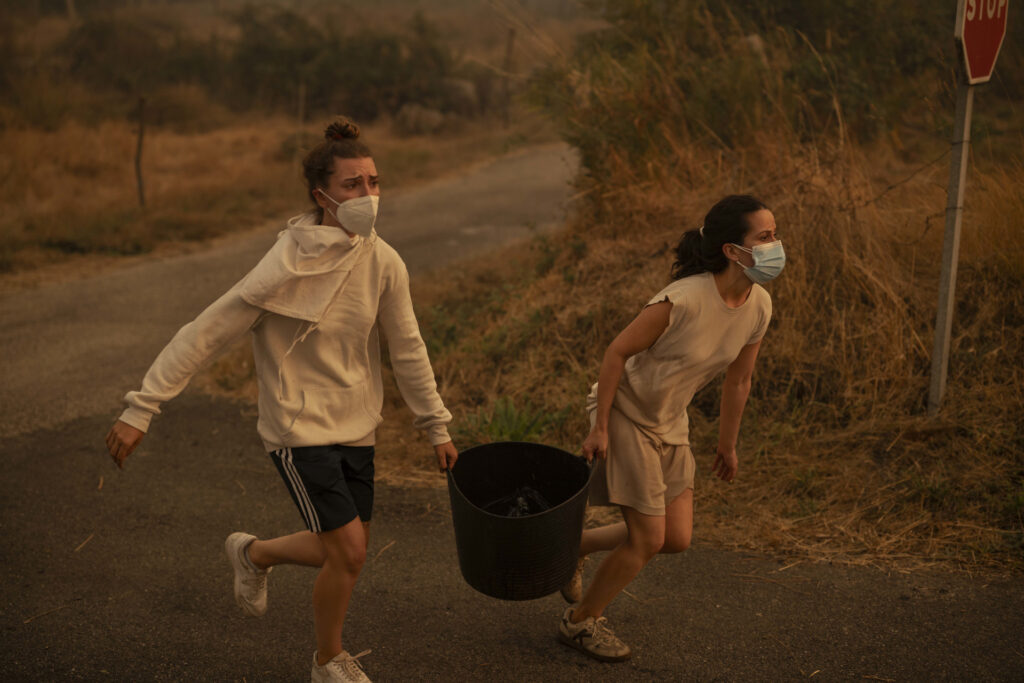
However, there is a real risk that the public may become detached from the perception of danger when excessively complex language is used, as warned by Elvira Santiago, a sociologist at the Universidade da Coruña: “Using such complex terms makes it difficult to talk about the real problem using a vocabulary everyone can understand. We need a common vocabulary that is as simple as possible. The term ‘large forest fire’ is descriptive enough to work with, and we all understand it”.
Whatever the label, what remains undeniable is the power of these events to alter their environment. As Juan Picos points out: “Normally, meteorology conditions the fires, but these fires are so powerful that they are capable of conditioning the meteorology”.
Prevention: The eternal unfulfilled duty
If there is one point of unanimous agreement among all consulted sources, it is the disproportion between the resources allocated to suppression versus those directed toward prevention and land recovery during the colder months. Currently, according to sources, the vast majority of public budgets and efforts are spent fighting fires during the summer, leaving forest clearing, fuel break management, and the restoration of burned land neglected during the winter months.
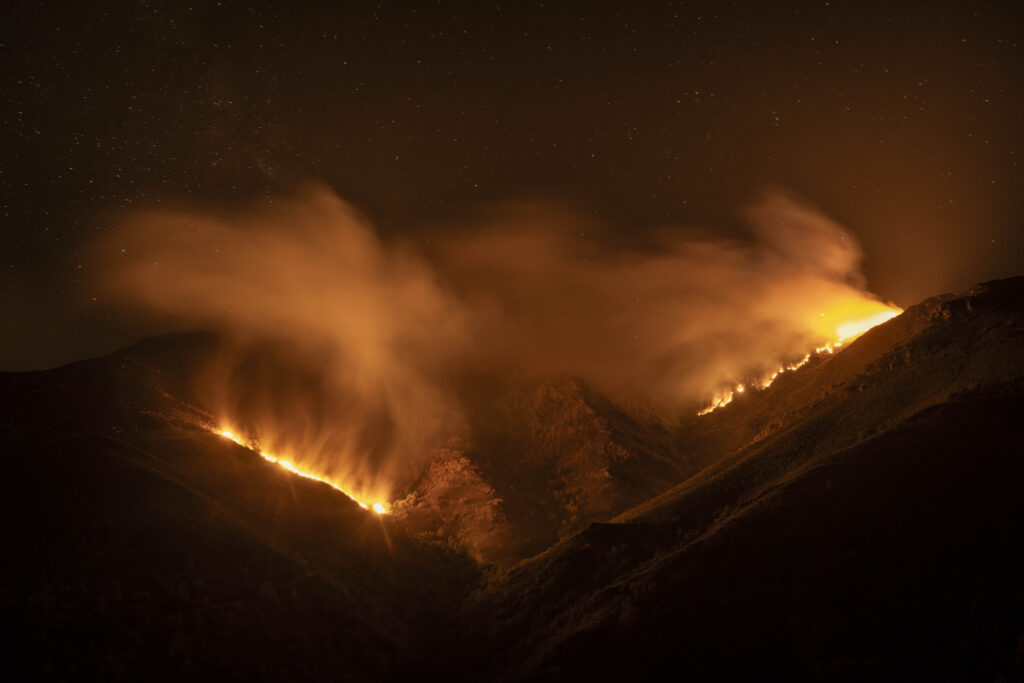
This reactive strategy is, according to all experts, insufficient for a scenario where technical resources are overwhelmed and where a lack of continuity in land management policies prevents addressing the problem structurally.
Belén Rodríguez, executive secretary of ADEGA (environmental NGO) and member of the Plataforma Monte Galego con Futuro (Galician Forest with a Future Platform), illustrates this imbalance using figures from the Plan de Prevención e Defensa contra os Incendios Forestais de Galicia -PLADIGA- (Plan for the Prevention and Defense against Forest Fires in Galicia): “The vast majority of the PLADIGA budget goes to fire suppression (75%), while only 25% goes to prevention and zero percent to restoration. Suppression resources will never be enough if we are missing the pillar of preventive measures”.
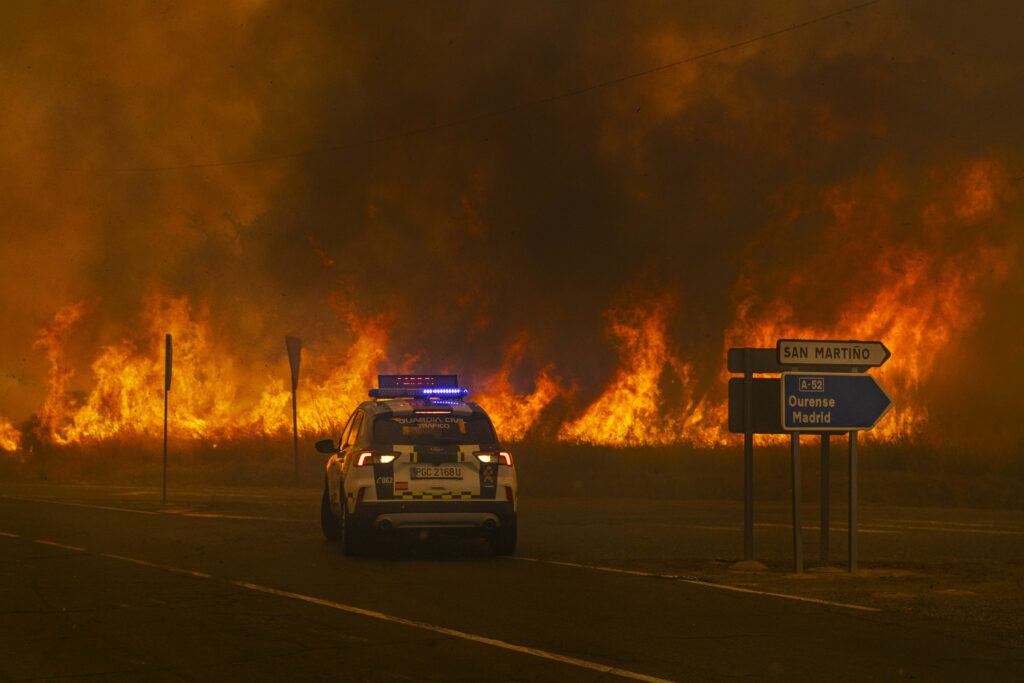
Rodríguez also denounces the lack of progress in restoration efforts following previous fire waves: “Of all the area burned in 2025, which totaled 118,000 hectares, barely 200 hectares have been recovered according to data from the Xunta itself—an irrelevant figure. A total of 2.85 million tons of fertile soil were lost last year alone”.
From a sociological perspective, Elvira Santiago criticizes the linear mindset with which public administrations approach risk management: “The problem is that it is designed linearly: first prevention, if that fails we move to suppression, then restoration, and then we start over. But reality is not linear. You haven’t even finished restoration before the fire reappears. Prevention ought to be a continuous effort across the territory”.
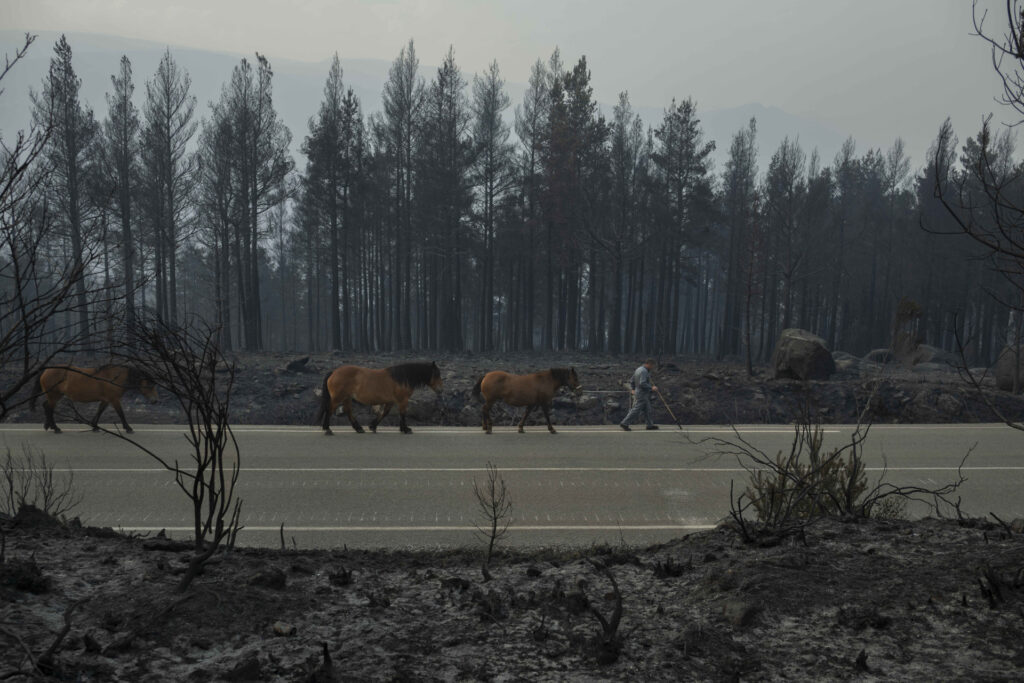
Furthermore, Santiago emphasizes the inadequacy of current strategies: “With these types of fires, we must acknowledge that technical means are not enough, making it incongruous to dedicate most resources—both human and financial—solely to the suppression phase”.
The perfect fuel
The abandonment of rural areas, along with the loss of traditional farming and livestock management, is identified as the fundamental fuel driving these large fires. The proliferation of unmaintained forest areas and the monoculture of pyrophytic species enable fires to approach populated areas dangerously.
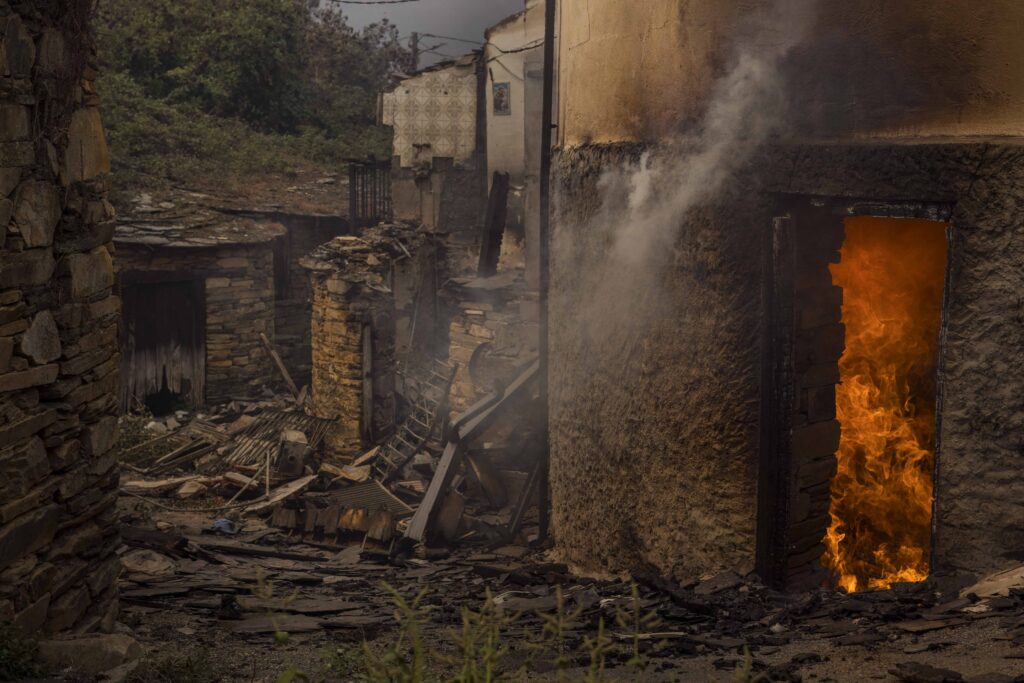
Albert Sandoval reflects on this transformation based on his direct experience in the field: “Almost all the fires I responded to last year were interface fires, near urban centers, housing developments, and villages. That is something that didn’t happen before: villages are overgrown, municipalities don’t keep them clear, whereas in the past, livestock kept the land clear and acted as firebreaks”.
Restoring the rural economic fabric and diversifying plant species, focusing on native vegetation, emerged during the conversation as the only long-term lifeline. Belén Rodríguez highlights the importance of biodiversity: “We need to bring life back to rural areas so that people live there. Where there are people, we know the forest doesn’t burn, or at least the fire faces far greater obstacles to spread. Maintaining healthy native biodiversity, with local species and wetlands, is fundamental not only to stopping fires, but also to mitigating the worst effects of climate change”.
In addition to land-use planning, Juan Picos stresses the urgent need to educate the public on emergency preparedness as these situations become increasingly frequent in inhabited zones: “Public preparedness is essential because we must accept that this will happen. We need to prepare people so they know what to do; otherwise, they will improvise during an emergency and act on their own, creating high-risk situations”.
Where does hope lie?
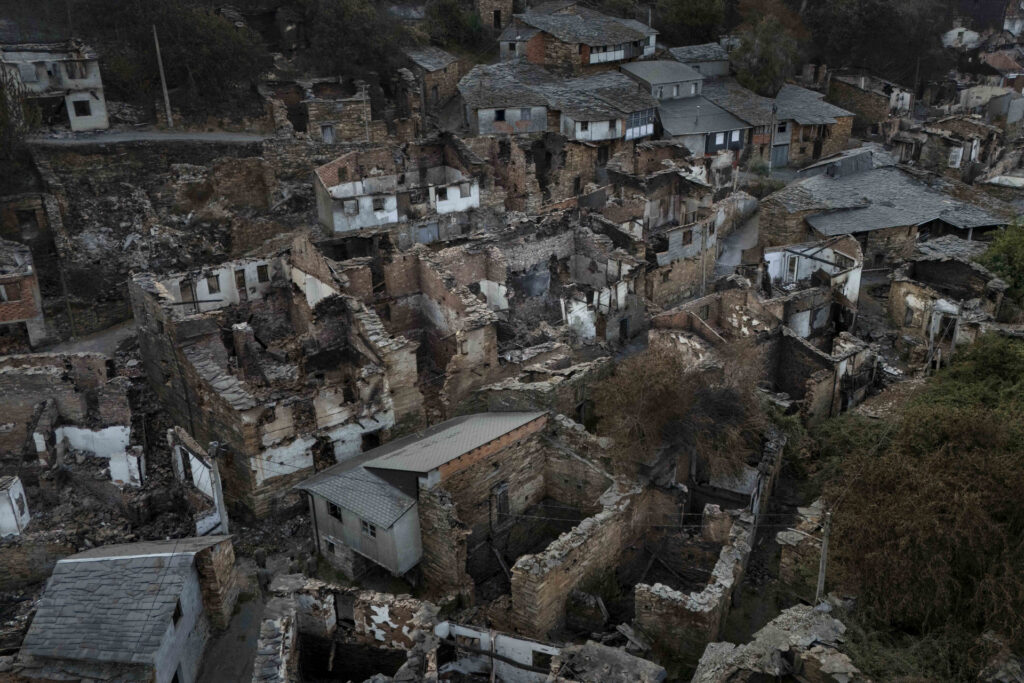
Sentiments ahead of the upcoming summer are overwhelmingly concerning. Wildfires are starting earlier in the calendar, and the fuel load in the forests continues to grow unchecked. As wildland firefighter Albert Sandoval puts it: “We have to prepare for a monster that is coming with an appetite and, on top of that, has food for miles and miles, because the countryside is abandoned and there is no investment in prevention as there should be”.
Without a firm political and social commitment to continuous year-round prevention, demographic recovery of rural areas, and land-use planning rooted in biodiversity, “we will keep chasing the fire, trying to empty the ocean with buckets while the forest burns away,” Juan Picos concludes pessimistically.